
Introduction
Choosing the right freediving fins can make or break your experience underwater. I’ve watched countless students struggle with fins that are too stiff, too soft, or just plain wrong for their skill level. The difference between a beginner fin and a professional carbon blade isn’t just about performance — it’s about matching your equipment to where you actually are in your freediving journey.
Good freediving fins should feel like an extension of your legs. They need to transfer power efficiently without exhausting you, maintain smooth propulsion through the water column, and actually fit your feet properly. What works for a competitive freediver pushing depth records won’t necessarily work for someone just learning proper finning technique in the pool.
This guide covers freediving fins across the full spectrum — from budget-friendly polymer blades perfect for beginners to premium carbon fiber options for experienced freedivers. As you progress, your fin needs change. Understanding what makes sense at each stage saves you money and frustration.
Quick Comparison Overview
| Model | Price Range | Level | Key Features |
|---|---|---|---|
| Oceanic Predator | $135 | Beginner | Ribbed blade, side rails, full-foot design |
| Mares Razor Pro | $139 | Beginner | Interchangeable blades, lightest option |
| Maverick DJ Sand Tiger | $337 | Intermediate | Spearfishing design, parabolic shape |
| Mares Razor Apnea | $434 | Intermediate | Variable thickness, soft/medium options |
| Mares Razor Matrix | $412 | Advanced | 3K carbon weave, responsive blade |
What Makes a Good Freediving Fin
The blade material determines how a fin performs. Polymer blades are forgiving and affordable, making them ideal for learning proper technique. Fiberglass blades offer better energy return and efficiency as you develop leg strength. Carbon fiber blades provide maximum responsiveness and performance but require proper technique to use effectively.
Blade stiffness matters more than most beginners realize. A blade that’s too stiff will exhaust your legs before you reach depth. Too soft and you’ll work harder for less propulsion. Manufacturers typically offer soft, medium, and stiff options. Start softer than you think you need.
Blade length affects efficiency and maneuverability. Longer blades (around 65-73 cm) generate more thrust per kick but require more space and leg strength. The blade angle — typically between 22-25 degrees — impacts how naturally the fin moves through your kick cycle.
Foot pocket design can’t be overlooked. Most freediving fins are designed to be worn with 3mm neoprene socks for comfort and fit. A poorly fitting foot pocket will cause blisters, reduce power transfer, and potentially lead to losing a fin at depth. The Mares Razor foot pocket has become something of an industry standard that other manufacturers design their blades to fit.
Your primary discipline matters too. Recreational freedivers and those focused on depth typically want longer, more efficient blades. Spearfishers often prefer slightly shorter, more maneuverable options that allow quick direction changes. Pool training calls for something in between.
Entry-Level Fins ($130-$150)
Oceanic Predator Freediving Fins
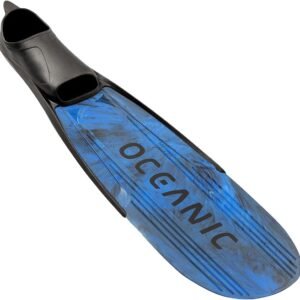
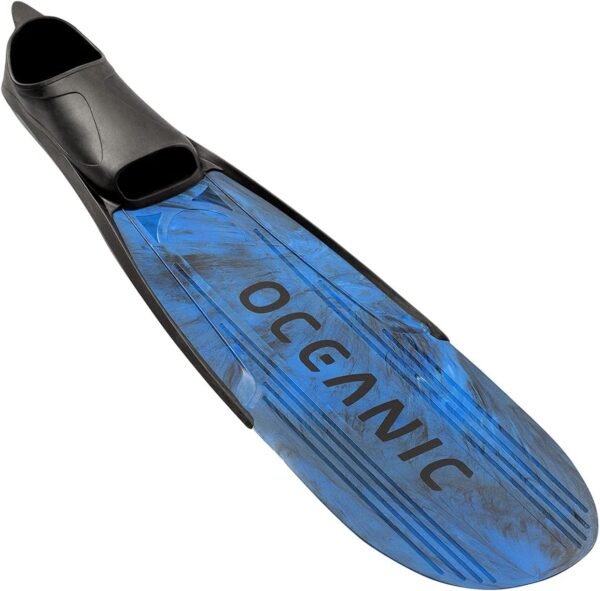
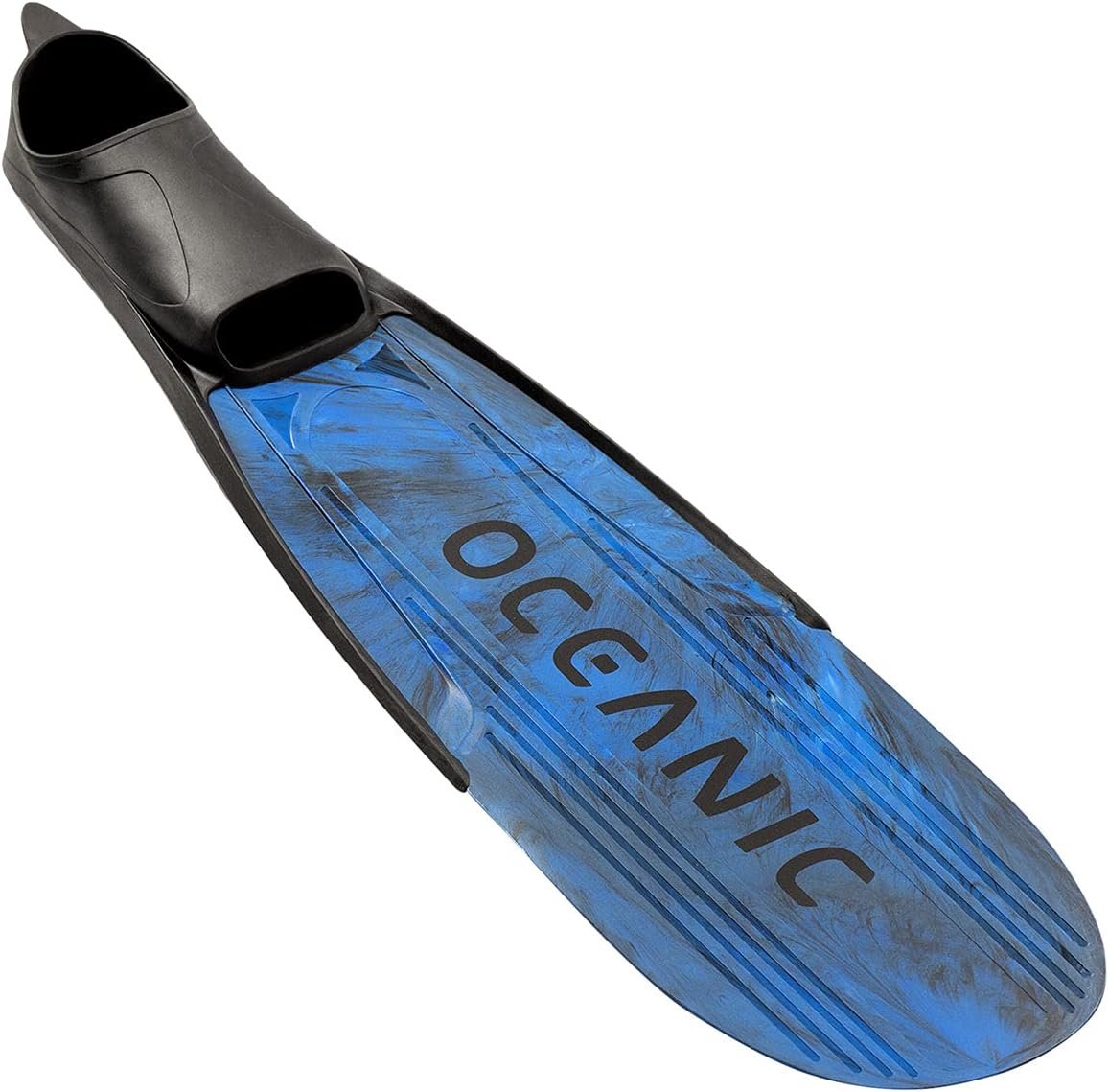
The Oceanic Predator sits right at the entry point for proper freediving fins at around $135. These feature a full-foot design with a rigid long blade made from polymer. The blade has ribbed construction with side rails that help channel water and maintain stability through each kick.
What makes these work well for beginners is the forgiving blade stiffness and the large heel pull tab that makes donning and doffing simple. They come in a blue camo pattern across five sizes from small (US 5.5-6) up to 2XL (US 11.5-12).
Many of my students start with the Predator fins because they’re affordable and actually perform. The polymer construction is durable enough to handle pool sessions and recreational ocean diving. They won’t give you the efficiency of more expensive blades, but they’ll teach you proper finning technique without breaking the bank.
Best for: Complete beginners, pool training, recreational snorkeling, budget-conscious divers.
Mares Razor Pro Freediving Fins
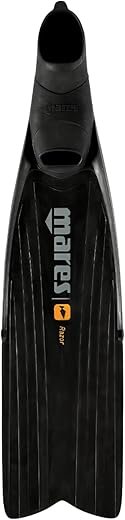
At $139, the Mares Razor Pro offers a significant step up in design. These use technopolymer construction with a blade that’s approximately 65 cm long and features variable thickness with parabolic bending. The blade width is 20.5 cm. They’re among the lightest freediving fins on the market.
The key feature here is the interchangeable blade system. You can start with the polymer blade and later upgrade to fiberglass or carbon blades while keeping the same foot pocket. The foot pocket itself is designed around input from a leading Italian podologist and is available in five sizes (39/40 through 47/48 European sizing).
Side ribs on the blade provide support and optimize the channel thrust effect, preventing lateral slippage during the kick. The blade angle is 22 degrees from the foot pocket. These fins are designed to be worn with 3mm neoprene socks.
The Razor Pro represents excellent value because of that upgrade path. A colleague instructor started his students on these and several have moved up to carbon blades using the same foot pockets. The comfort level is notably better than most entry-level fins.
Best for: Beginners who plan to progress, divers wanting upgrade options, those prioritizing comfort and fit.
-
 ×
×
Oceanic Predator Freediving Fins
$134.95
Open full product pageDurable entry-level fins with ribbed blade and convenient heel tab for beginner freedivers.
00 -
 ×
×


Mares Razor Pro Freediving Fins
$138.95
Open full product pageComfortable modular plastic fins with upgrade path to composite blades for growing freedivers.
00
Intermediate Fins ($330-$440)
Maverick America DJ Sand Tiger Carbon Freediving Fins
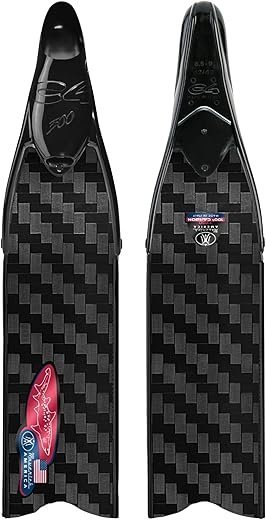
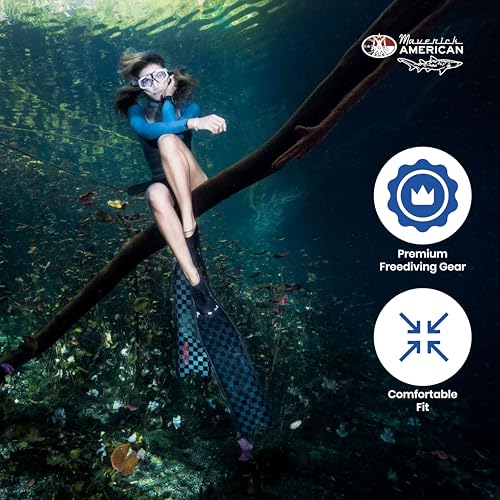
The DJ Sand Tiger sits at $337 and represents your entry into carbon fiber territory. These were designed specifically for spearfishing in collaboration with DJ Struntz, an American blue water hunter and professional spearfishing photographer. They’re actually a redesign of the sought-after Rekord 3 fin from Pierre Von Ecke that disappeared from the market back in 2006.
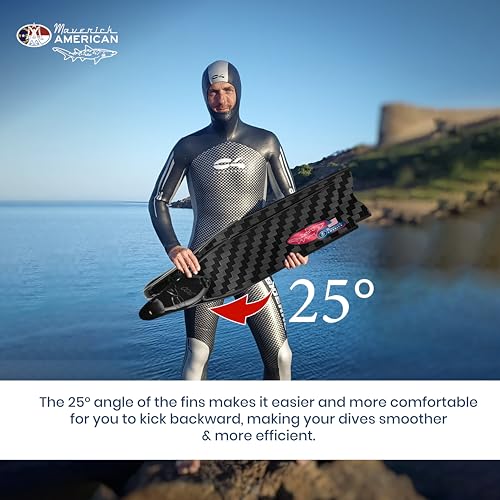
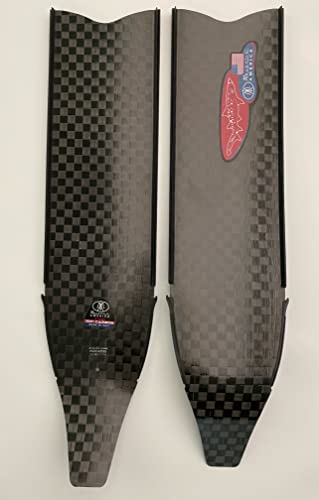
Construction uses T700 carbon fiber in a compression molded variable thickness design. The blade measures 730mm long by 220mm wide with medium stiffness (rated 30/Medium). The blade angle is 25 degrees. What makes these different from pure depth fins is the parabolic shape — it displaces more water volume in the midline section of the blade and then tapers toward the tip.
This design was intentional for spearfishing situations where you need powerful thrust during the strongest part of your kick but also want a shorter, more agile fin for quick maneuvers. The fins are compatible with Omer Stingray, Salvimar Step, Mares Razor, and Beuchat foot pockets, so you have flexibility in choosing your foot pocket.
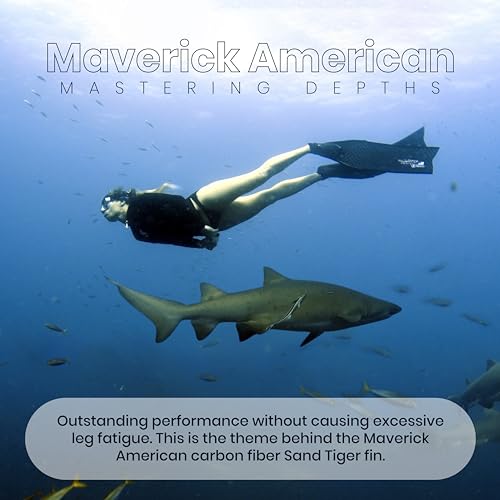
In my opinion, these fins excel at providing outstanding performance without causing excessive leg fatigue. They’re particularly well-suited for the unpredictability of spearfishing where you might need to hold position, make quick direction changes, or sprint after fish. Available in sizes 36/37 and 46/47.
Best for: Spearfishers, freedivers transitioning to carbon, those wanting a more maneuverable carbon blade.
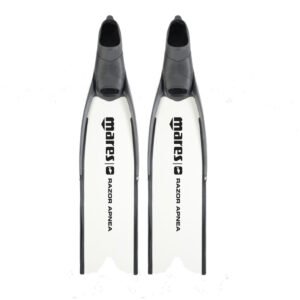
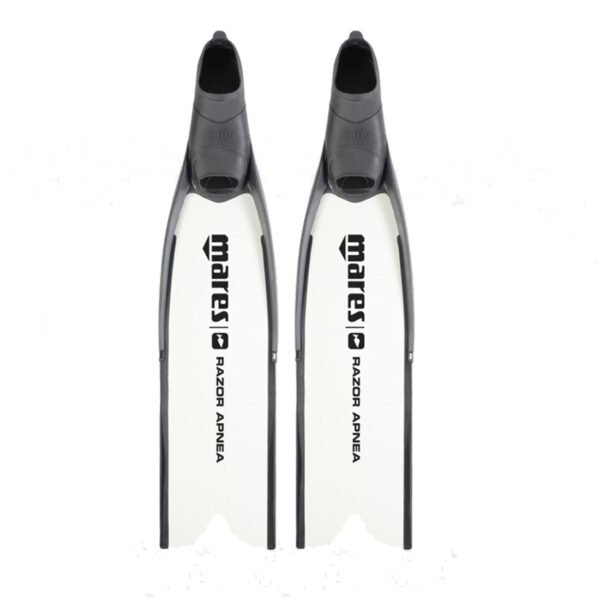
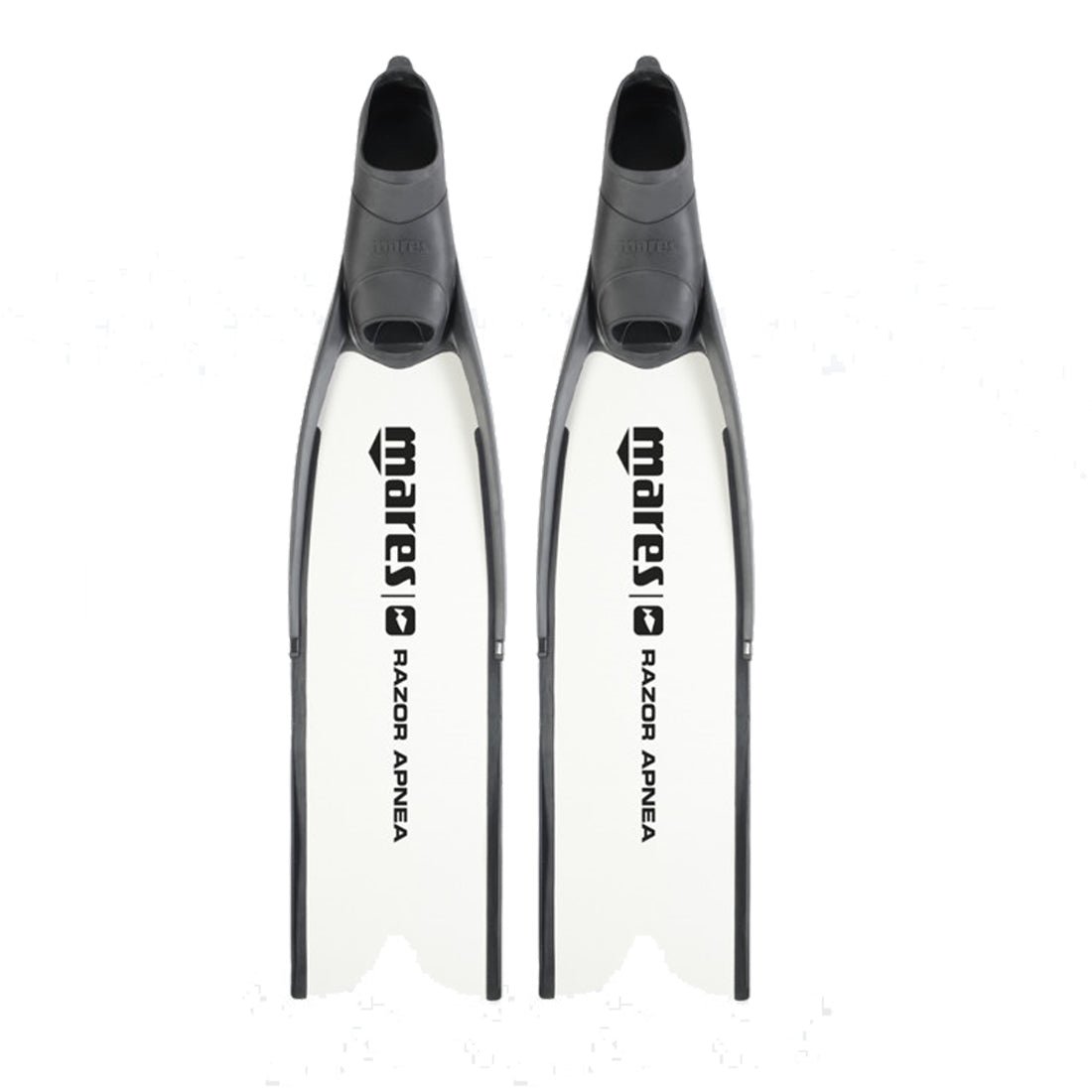
Mares Razor Apnea Fiberglass Freediving Fins
At $434, the Razor Apnea uses pre-impregnated fiberglass layers for the blade construction. The blade has the same dimensions as the carbon version — 65 cm long and 20.5 cm wide — with variable thickness and high-performance parabolic bending. The manufacturing process is described as high-quality, which in practice means consistent performance across production runs.
The new side profiles with variable height support and optimize flexibility while enhancing the channel thrust effect. These are available with either soft or medium stiff blade options, giving you some flexibility based on your leg strength. The blade inclination is 22 degrees from the foot pocket.
Like the polymer version, these are designed to be worn with a 3mm diving sock and use the same trusted Mares Razor foot pocket. They’re available in sizes 45 and 47. A protective bag for the fins is included.
Fiberglass sits in an interesting middle ground. It offers better energy return than polymer but doesn’t require the perfect technique that carbon demands. Many of my customers are using fiberglass fins as their main training blades — they’re efficient enough for depth work but forgiving enough that small technique flaws won’t completely kill your performance.
Best for: Intermediate freedivers, those building leg strength, divers wanting efficiency without carbon’s demands.
-
 ×
×
Maverick America DJ Sand Tiger Carbon Freediving Fins
$336.71
Open full product pageLightweight carbon fins with parabolic blade design optimized for spearfishing maneuverability.
00 -
 ×
×
Mares Razor Apnea Fiber Glass Freediving Fins
$433.99
Open full product pageQuality fiberglass fins delivering composite performance at mid-range pricing for advancing freedivers.
00
Advanced / Expert Fins ($410-$550)
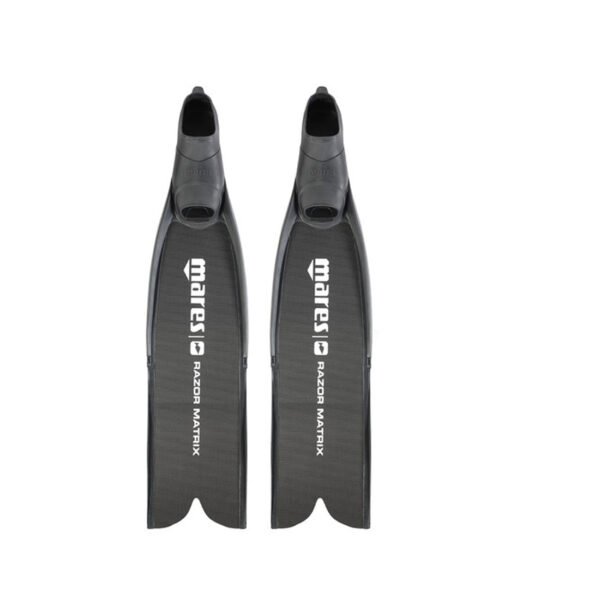
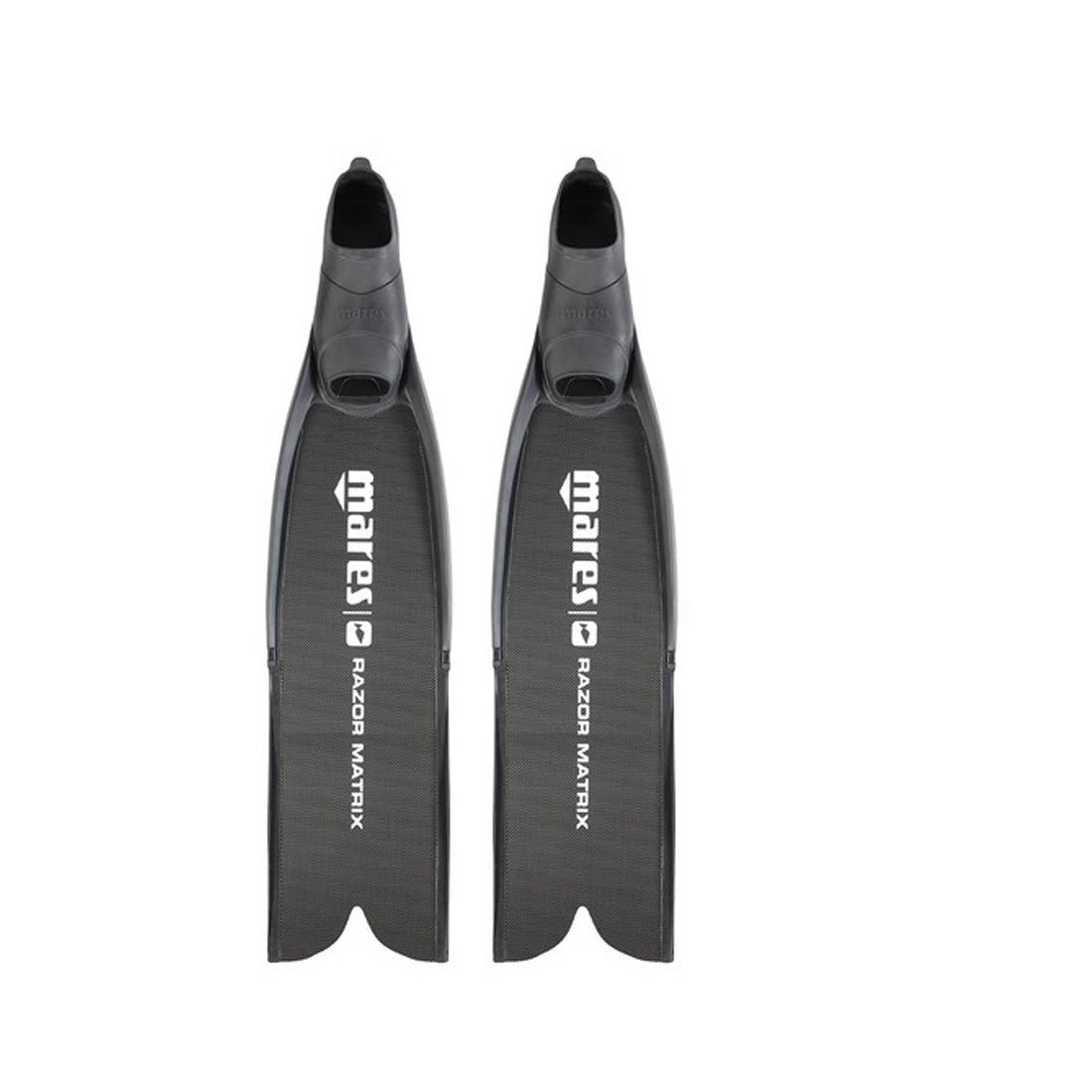
Mares Razor Matrix Carbon Freediving Fins
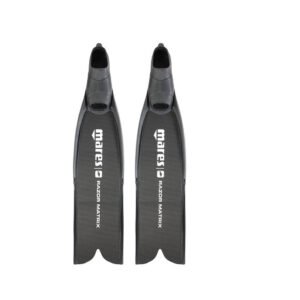
The Razor Matrix at $412 represents Mares’ top-tier offering. The blade is produced with pre-impregnated carbon and fiberglass layers, featuring new 3K carbon where fibers are woven at 90 degrees. This weaving pattern means the fibers cross over each other fewer times, which increases the responsiveness of the blade.
The blade uses variable thickness and high-performing parabolic flexion. At 65 cm long and 20.5 cm wide, it’s the same footprint as other Razor models. New variable side ribs support and optimize both channel thrust and flex characteristics. The blade inclination is 22 degrees relative to the foot pocket.
These are available with soft or medium strength blade options, giving experienced freedivers the ability to fine-tune based on their preferences and leg strength. The Razor foot pocket is designed to be worn with a 3mm neoprene sock. Sizes available are 43 (medium) and 45. A fin protection bag is included.
The high-quality manufacturing process shows in the consistency. The combination of woven carbon and fiberglass layers provides excellent responsiveness while maintaining some of the forgiving characteristics of fiberglass. In my opinion, this blend makes the Matrix easier to use than pure carbon blades while still delivering professional-level performance.
Best for: Experienced freedivers, depth specialists, those wanting top performance with some forgiveness, competitive freedivers.
-
 ×
×
Mares Razor Matrix Carbon Freediving Fins
$549.95
Open full product pagePremium carbon-fiberglass fins with exceptional blade response for serious depth diving.
00
Common Mistakes When Choosing Freediving Fins
The biggest mistake I see is beginners buying fins that are too stiff. Your legs aren’t conditioned yet for the resistance that stiff blades create. You’ll fatigue quickly, your technique will suffer, and you might even injure yourself. Start with softer blades and work your way up as your leg strength develops.
Ignoring foot pocket fit is another common issue. Most freediving fins require 3mm neoprene socks for proper fit. Trying to use them barefoot or with the wrong sock thickness leads to blisters, hot spots, and potentially losing a fin during a dive. Take the time to get the fit right.
Buying advanced carbon fins before you’re ready wastes money and hampers your progress. Carbon blades require clean, efficient technique to perform well. If your finning mechanics aren’t solid, carbon fins will actually perform worse than polymer blades while costing three times as much. Master technique with forgiving blades first.
Not considering your primary use is another pitfall. Depth-focused freedivers benefit from longer, more efficient blades. Spearfishers need something more maneuverable. Pool training calls for different characteristics than open water diving. Think about where you’ll actually be using the fins most often.
Finally, don’t assume expensive automatically means better for you. The best fin is the one that matches your current skill level and diving style. A $400 carbon blade won’t make you a better freediver if you haven’t developed the technique to use it properly.
Conclusion and Final Recommendations
For absolute beginners, the Oceanic Predator offers the most affordable entry into proper freediving fins. At $135, it’s hard to beat for learning basic technique without a significant investment. If you can stretch the budget slightly, the Mares Razor Pro at $139 provides better comfort and that valuable upgrade path through interchangeable blades.
Progressing freedivers ready for their first performance upgrade should look at the Mares Razor Apnea fiberglass fins. At $434, they provide significantly better efficiency than polymer while remaining forgiving enough that you won’t be punished for minor technique flaws. The soft and medium stiffness options let you fine-tune to your leg strength.
For spearfishing specifically, the Maverick DJ Sand Tiger makes the most sense. The design was purpose-built for spearfishing situations, and at $337, it brings you into carbon territory at a reasonable price point. The parabolic blade shape provides the thrust you need without being unwieldy in tight situations.
The best high-performance option for experienced freedivers is the Mares Razor Matrix. The carbon and fiberglass blend provides excellent responsiveness while being slightly more forgiving than pure carbon. At $412, it’s priced competitively for what you’re getting, and the build quality justifies the investment.
Remember that fins are just tools. The best fin won’t compensate for poor technique, and the wrong fin can hold back even good technique. Match your equipment to your current skill level, focus on developing clean mechanics, and upgrade when you’ve actually outgrown what you’re using. Your legs will thank you.