
0
0
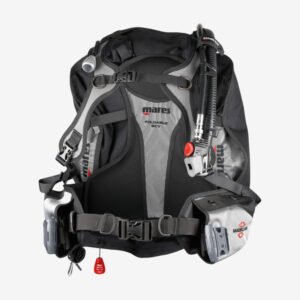
Mares Prestige BCD
Comfortable jacket BCD with good padding and lift capacity, but inconsistent build quality.
Pros
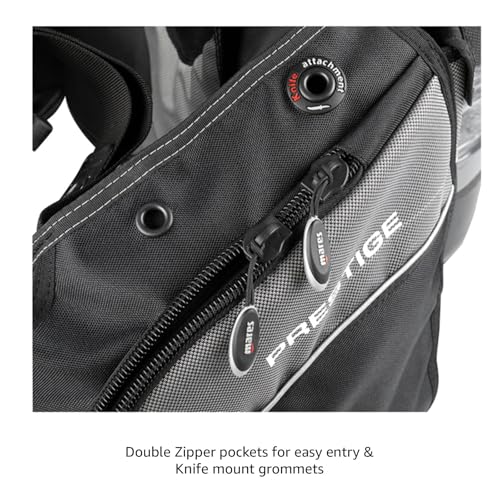
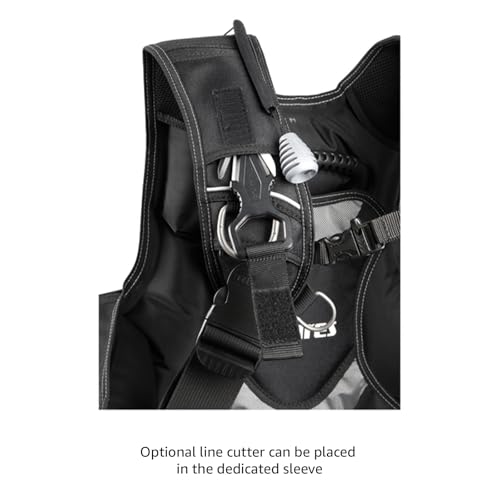
Excellent back padding and comfortable shoulder straps, Swivel clips on shoulder straps, Well-placed D-rings
Cons
Price point doesn't match the actual durability and construction quality, Seams started separating after just a few days
Compare Prices

Mares Unisex Prestige BCD - Durable Adjustable Lightweight Versatile Scuba Diving Jacket-Style BCD
Amazon.com

* We earn a small commission on your purchase without increasing the price.
Mares Prestige BCD – Good Volume and Padding, But Quality Concerns
One of my candidates in the PADI IDC showed up with a brand new Mares Prestige BCD so, although I did not dive with it myself, I had a pretty close look at it and of course, we chatted about his experience with this BCD.
What You’re Getting
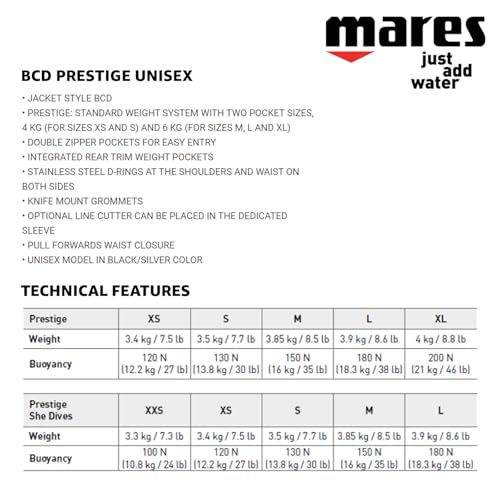
The Mares Prestige is a jacket BCD that sits in the mid-range price bracket at around $380-450, depending on where you shop. It comes in five sizes from XS to XXL, with lift capacities ranging from 13 kg in the smallest size to 18 kg in the largest. The BCD is available in black with blue or red accents.
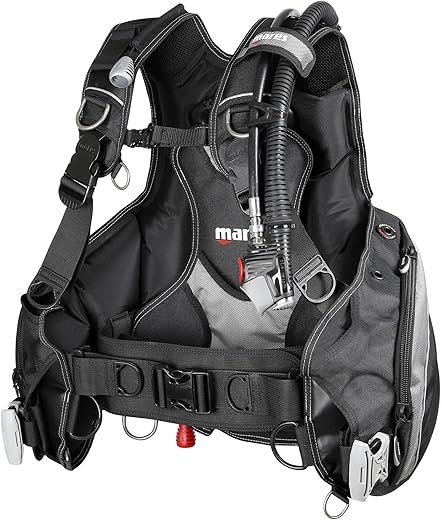
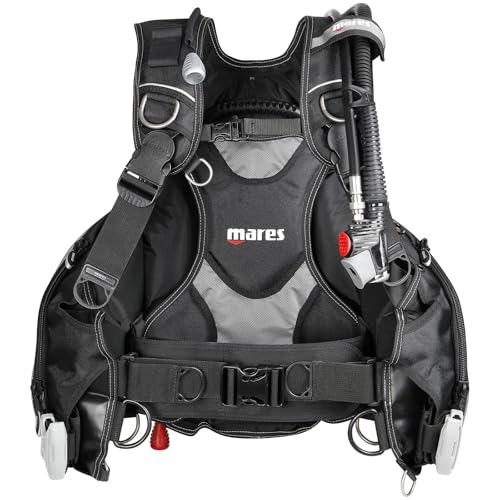
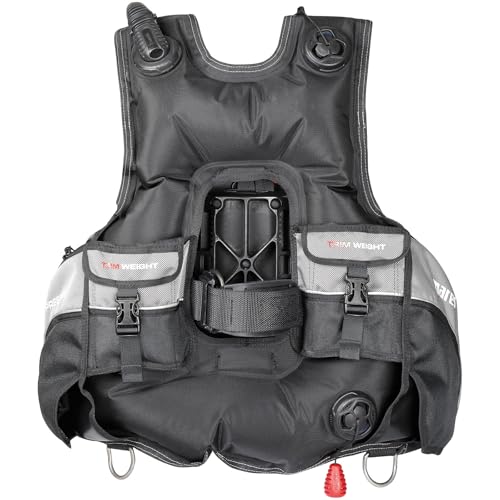
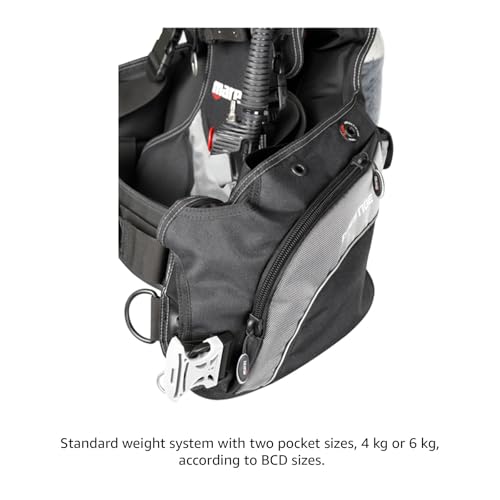
The BCD features an integrated weight system with quick-release pockets that hold up to 5 kg each, standard inflator with pull dump, and multiple D-rings for gear attachment. I immediately liked the backplate that comes with good padding. It looks like a comfortable BCD that offers good lift capacity.
Real-World Performance
Comfort and Padding
The comfort of the BCD was also one of the first thing my candidate mentioned. The Prestige has substantial cushioning on the backplate, which makes a difference during long surface intervals or boat rides. The waist strap and cummerbund system is straightforward. Nothing fancy, but it does the job of keeping the BCD secure without excessive tightening.The shoulder straps are also well-padded, and the swivel clips on the shoulders add some flexibility in movement. This BCD will fit people with many ‘different proportions’. Mares markets this BCD as a unisex model.
Buoyancy and Lift
With lift capacities from 13 to 18 kg, the Prestige offers good volume for recreational diving. From what I’ve heard from dive instructors who’ve used similar Mares BCDs, the bladder inflates evenly and provides stable buoyancy control.
The standard inflator works smoothly, and the pull dump valve is easy to reach and operate. The dump valves are responsive without being overly sensitive.
D-Rings and Attachment Points
The Prestige comes with plenty of stainless steel D-rings. There are the standard positions on the shoulders and waist, but what caught my attention was one smaller D-ring positioned slightly higher on the shoulder area. This placement is actually quite useful for clipping off a backup light or SMB spool where it’s easily accessible but not in the way.
The variety of D-ring positions gives you options for configuring your gear setup. For recreational divers carrying a camera, torch, and safety gear, there’s enough attachment space without things getting cluttered.
Durability Concerns
Here’s where things get problematic. After just a few days of diving during the IDC, multiple seams on my candidate’s BCD started coming apart. This is concerning for a brand new piece of equipment at this price point. The stitching began to separate along one of the shoulder straps and near the pockets.
I’ve heard similar reports from other instructors about quality issues with Mares BCDs in recent years. Some units hold up fine, but others develop problems early. It seems inconsistent, which makes it hard to recommend with confidence. The 420-denier nylon material itself feels reasonably tough, but if the stitching fails, the material quality doesn’t matter much.
Weight Integration
The integrated weight system uses pull-to-release pockets that hold up to 5 kg each. Although I’m not a fan of integrated weights with pull release, the mechanism works as intended – pull the handle and the pocket releases cleanly. The pockets are easy to reload and secure back in place. For most recreational diving, 10 kg total capacity is sufficient, though cold-water divers in thick drysuits might need additional weight on a belt.
Comparison Context
At $380-450, the Mares Prestige competes with the Aqualung Pro HD ($499-550) and the Cressi Aquaride ($390-550). The Aqualung Pro HD is built with ResisteK material that resists fading and abrasion from salt and chlorine. It features the SureLock II weight system that’s known for reliability, and comes with a proprietary backpack with non-slip tank pad. The Pro HD is heavier and bulkier than the Prestige, but it’s backed by consistent quality control and a solid reputation among dive professionals.
The Cressi Aquaride offers an innovative design where the shoulder straps don’t inflate with the air cell, which reduces shoulder pressure when supporting your tank. It uses 420-denier nylon construction similar to the Prestige, and features the Lock Aid System for integrated weights. The Aquaride generally receives positive feedback for comfort and build quality, though it sits in the same price range as the Prestige.
Both alternatives offer more consistent construction quality than what I’ve observed with the Prestige. The issue is that at the Prestige’s price point, you expect better quality control. The comfort features are nice, but they don’t mean much if the BCD doesn’t hold up.
Our Professional Opinion
The Mares Prestige has some genuinely good features. The back padding is comfortable, the swivel shoulder clips add flexibility, and the D-ring placement is well thought out. The lift capacity is appropriate for recreational diving, and the weight integration system works smoothly.
But the build quality issues are hard to overlook. Seams coming apart after just a few days of use is unacceptable for a $400+ BCD. I’ve seen too many similar reports to dismiss this as an isolated incident. Quality control seems inconsistent across production batches.
If you’re buying this BCD, inspect it thoroughly before your first dive, and keep your receipt. Check all the stitching, test the dump valves, and examine the weight pocket attachments. If you notice any issues, return it immediately.
Final Recommendation
This is a difficult one to recommend. The Prestige has comfort features that many divers will appreciate, particularly the back padding and shoulder swivels. If you try one on and it fits well, and if you get a unit with solid construction, it could serve you well for recreational diving.
However, given the quality control concerns, I’d suggest looking at alternatives first. The Cressi Aquaride costs about the same and offers better reliability. The Aqualung Pro HD costs more but delivers consistent quality.
If you do decide to buy the Mares Prestige, buy from a retailer with a good return policy and test it thoroughly during your first few dives. Watch for any signs of stitching failure or material separation. Don’t wait until you’re 50 dives in to discover problems.
For dive professionals or anyone planning extensive diving, I’d recommend spending your money on something with a better track record for durability. Your BCD is not the place to gamble on quality control.
| General Specifications | ||||||||||||||||
|---|---|---|---|---|---|---|---|---|---|---|---|---|---|---|---|---|
|
||||||||||||||||
| BCD Specifications | ||||||||||||||||
|
||||||||||||||||
| Pros and Cons | ||||||||||||||||
|
||||||||||||||||
Related Products
-
 ×
×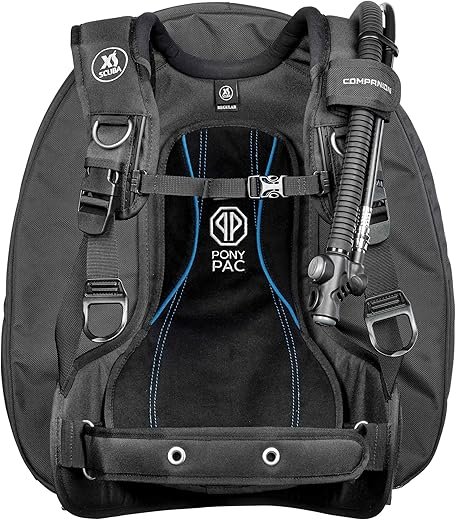
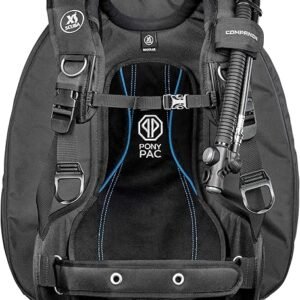
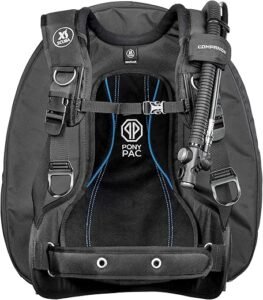
XS Scuba Companion Travel BCD
$446.62
Open full product pageUltra-lightweight budget travel BCD with essential features for warm water diving
00 -
 ×
×
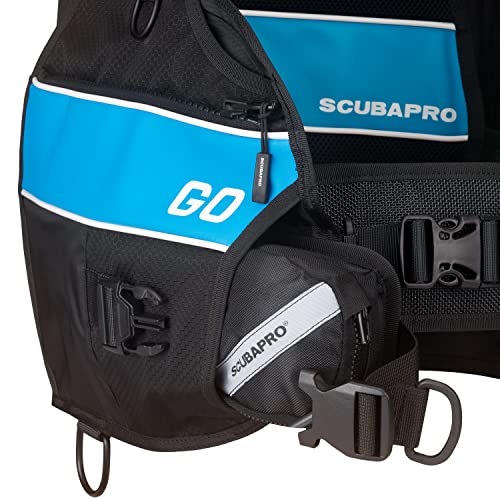
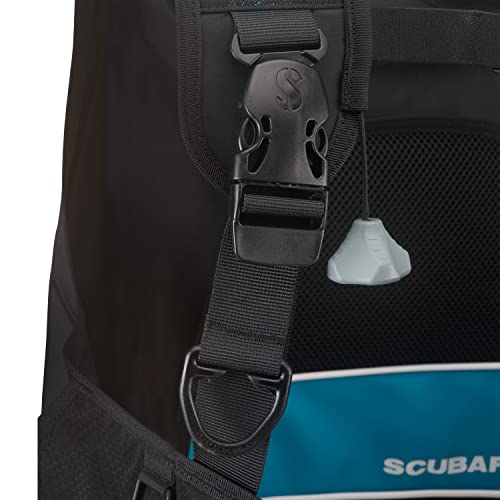
Scubapro Go BCD
$739.00
Open full product pageUltra-lightweight budget travel BCD with essential features for warm water diving
00 -
 ×
×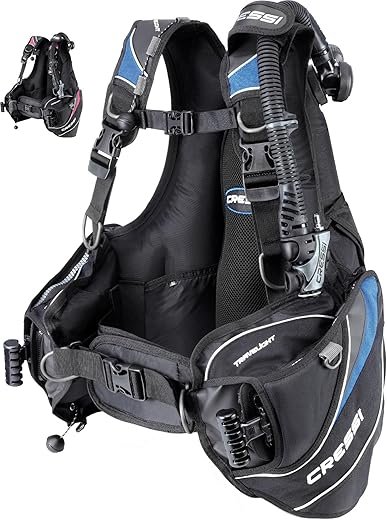
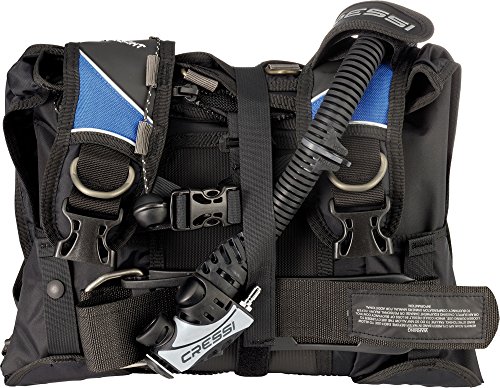
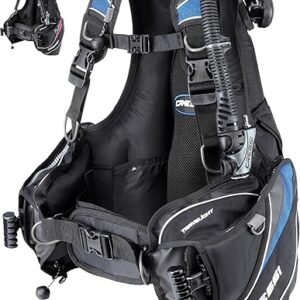
Cressi Travelight BCD
$422.94
Open full product pageLightweight jacket-style travel BCD with traditional wrap-around comfort
00 -
 ×
×
Scubapro Glide BCD
$779.00
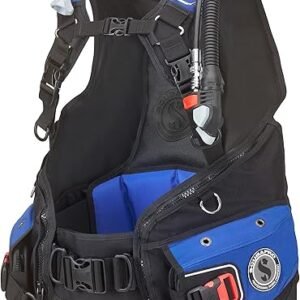
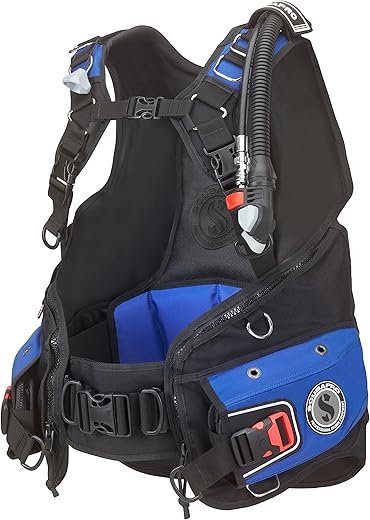
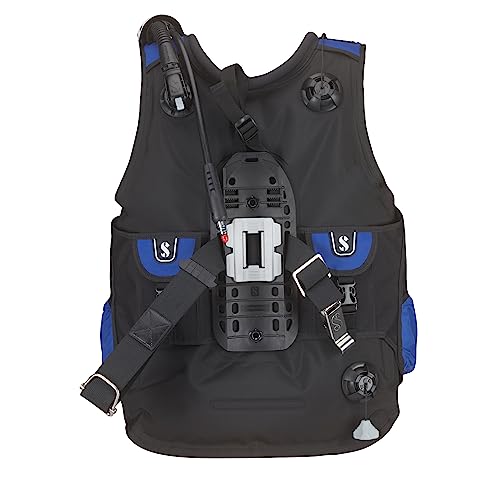
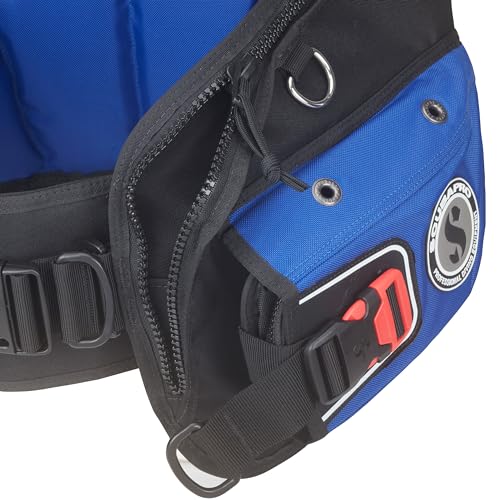
Open full product pageComfortable jacket BCD with Y-Fit shoulders and spacious storage for recreational divers and professionals
00
Latest Revies







Reviews
There are no reviews yet.