


0
0
Suunto Ocean Wrist Computer
Premium dive computer and fitness watch with exceptional AMOLED display and wireless air integration.
Pros
Excellent battery life, Exceptional 1.43-inch AMOLED display, Wireless air integration supports up to five transmitters
Cons
60 m depth limit restricts to recreational diving, No display customization (cannot rearrange the dive screen data), Quite heavy for daily wear
Compare Prices

SUUNTO Ocean Dive Computer, GPS Multisport Watch for Training, Underwater Route Tracking & Wireless Tank Pressure Monitor, AMOLED Touchscreen, Dualband GNSS,...
Amazon.com


* We earn a small commission on your purchase without increasing the price.
Suunto Ocean Dive Computer Review
The Suunto Ocean is a smartwatch-style dive computer built for divers who want a single device that handles both diving and everyday fitness tracking. Its standout features are the brilliant AMOLED screen and wireless air integration capability, positioning it as a serious option for recreational divers who also maintain an active lifestyle above water.
For many Suunto lovers this computer is an upgrade from their D5 or D6. It excels at what it’s designed for, though it comes with some limitations worth understanding before you buy.
What You’re Getting
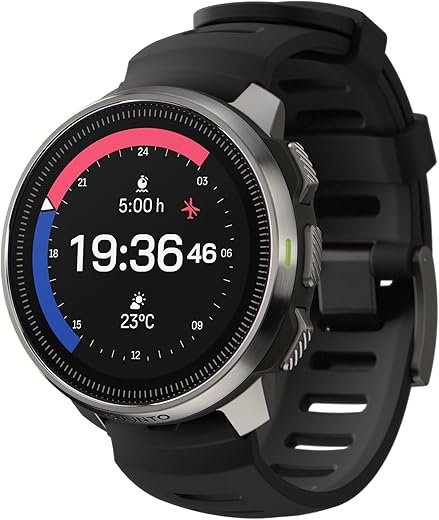
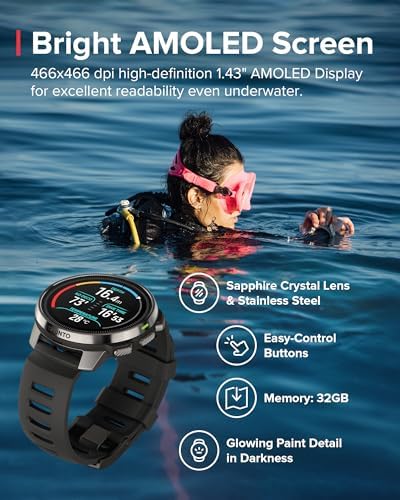
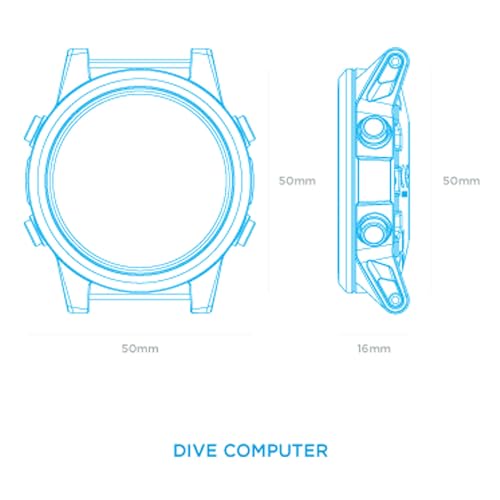
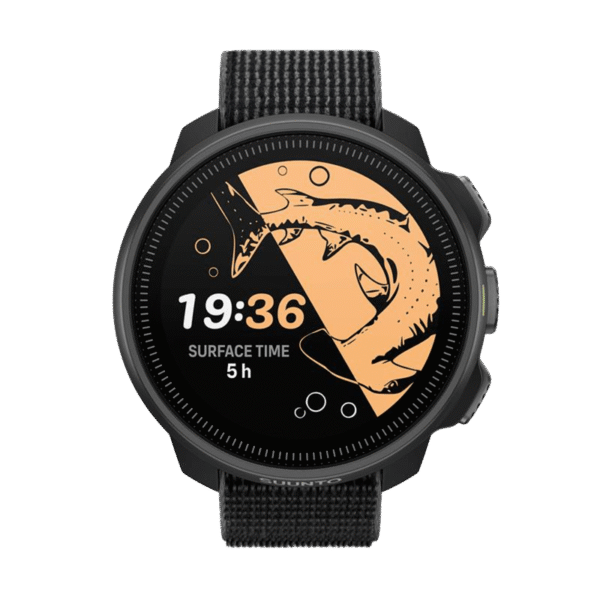
The Suunto Ocean features a 1.43-inch AMOLED touchscreen with sapphire crystal glass and a stainless steel bezel. The watch measures 49.9 x 49.9 x 13.2 mm and weighs 99 g. It’s water-resistant to 100 m but rated for diving to 60 m depth.
The computer runs the Bühlmann 16 GF algorithm with customizable gradient factors. It supports single-gas recreational diving with nitrox and multi-gas modes for more advanced diving. The Ocean can pair with up to five Suunto Tank POD transmitters for wireless air integration.
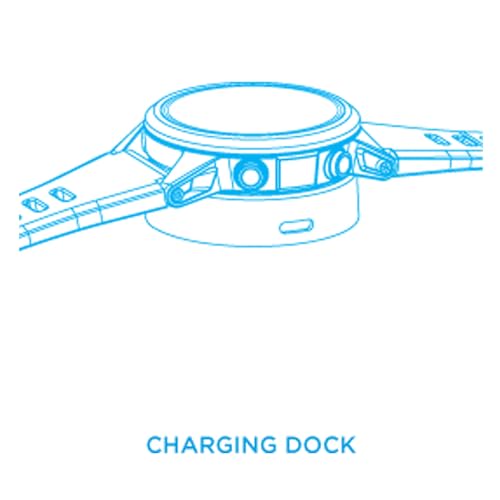
The rechargeable battery provides up to 40 hours of continuous dive tracking or approximately 4 days with three dives per day plus daily activity tracking. It charges fully in about one hour via USB cable.
The Ocean is available in three color options. The price sits around $899-900 USD for the computer alone, or approximately $1200 with a Tank POD transmitter included. The computer comes with a charging cable and is manufactured in Finland.
This is a mid to upper-mid range dive computer designed for recreational and advanced recreational divers who want smartwatch functionality combined with solid dive tracking capabilities.
Real-World Performance
Display Quality
The 1.43-inch AMOLED display is genuinely impressive underwater. Multiple instructors I’ve spoken with describe it as one of the brightest and most readable screens they’ve used on any dive computer. The 466×466 pixel resolution is currently the highest available on dive computers. The color-coded depth indicators and ascent rate warnings make information easy to process at a glance, similar to what you’d see on Shearwater computers.
The touchscreen works on the surface but automatically disables underwater, where you navigate using the three side buttons. This takes a bit of getting used to if you’re coming from a fully button-operated computer, but the button layout is logical and becomes second nature after a few dives.
One limitation that several pros have mentioned is the lack of display customization. You cannot modify what data appears on your dive screen or rearrange fields. The default layout is clear and well-designed, but if you prefer personalizing your display like you can with Garmin or Shearwater computers, this might feel restrictive.
Dive Modes and Algorithm
The Ocean runs Bühlmann ZHL-16C with gradient factors, which is a welcome change from Suunto’s previous RGBM algorithms that many divers found overly conservative. You can customize the gradient factors or choose from preset conservatism levels. The computer doesn’t lock you out if you violate the ceiling, which is appreciated by many experienced divers.
For recreational diving with air and nitrox, the computer performs exactly as you’d expect. The multi-gas support allows up to five different gas mixes with up to 100% oxygen, making it suitable for advanced recreational and light technical diving within the 60 m depth limit.
The 60 m depth rating is the main technical limitation. If you regularly dive deeper or need trimix support or CCR modes, you’ll need to look elsewhere. The computer will display an algorithm deviation warning if you exceed 60 m, though the watch itself is water-resistant to 100 m.
Air Integration
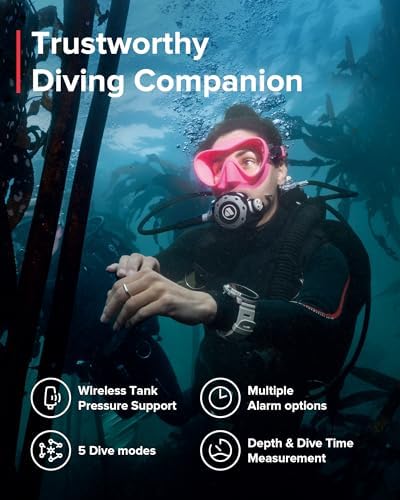
The wireless tank pressure integration with Suunto Tank POD works well when properly paired. The pairing process is straightforward – pressurize your tank, hold the computer close to the transmitter, and follow the on-screen prompts. The computer can connect to up to five transmitters, which is sufficient for most recreational divers, though fewer than Garmin’s eight-transmitter capacity on the Mk3i.
Common feedback from instructors is that the air integration display is clear and easy to read, with remaining gas time calculations that help with dive planning. The transmitter is sold separately and adds approximately $300 to the total cost.
Battery Life
In real-world testing, the battery performance exceeds Suunto’s advertised specifications. Divers report getting closer to 50-60 hours in dive mode during extended testing, compared to the advertised 40 hours. For typical dive trips with 2-4 dives per day plus surface interval use, the computer easily handles multiple days without charging.
In daily smartwatch mode with all-day heart rate monitoring, expect around 10-12 days of battery life. The fast charging is convenient – a full charge takes about an hour, so even if you forget to charge overnight, you can top up during a surface interval.
GPS Dive Tracking
One of the Ocean’s unique features is underwater route tracking. Using GPS at entry and exit points combined with internal sensors, the computer maps your dive path in 3D and displays it in the Suunto app afterward. This feature works well when you remember to activate dive mode manually at the surface before descending. If the computer auto-activates at 1.2 m depth, the GPS tracking may not capture the full route.
This feature is particularly appreciated by dive guides and photographers who want to document their routes or remember specific locations.
Compass
Earlier versions of the Ocean lacked an in-dive compass, which was a significant oversight at this price point. Suunto has since added compass functionality via software update, allowing you to set and follow bearings during the dive. The compass view can now be accessed alongside dive data, though some divers still prefer carrying a traditional backup compass.
Smartwatch Features
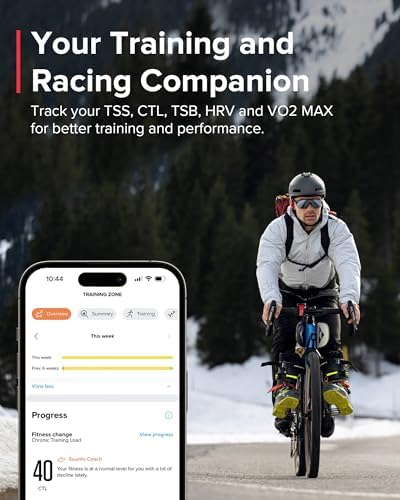
Beyond diving, the Ocean offers over 95 sport modes, heart rate monitoring, sleep tracking, GPS navigation with free offline maps, and smartphone notifications. The sports tracking is solid though not as comprehensive as dedicated Garmin fitness watches. You won’t get advanced metrics like cycling dynamics or detailed training load analysis, but for most recreational athletes, the tracking is more than adequate.
The Suunto app syncs dive logs automatically via Bluetooth and presents them in an attractive, easy-to-read format. The 3D dive profiles with GPS-mapped routes look impressive and are useful for planning future dives.
Comparison with Competitors
At $899, the Suunto Ocean sits between entry-level recreational computers like the Cressi Neon or Shearwater Tern ($500-600) and premium models like the Garmin Descent Mk3i ($1600+) or Shearwater Perdix 2 ($900-1100).
The Ocean’s closest direct competitor is the Garmin Descent G2 at $699. The G2 offers similar AMOLED screen quality and smartwatch features but lacks air integration capability. If wireless tank pressure monitoring isn’t important to you, the G2 provides excellent value at $200 less.
For divers wanting air integration in a smartwatch form factor, your main options are the Ocean at $900 or the Garmin Descent Mk3i starting at $1600. The Mk3i offers deeper depth rating (200 m), trimix support, connection to eight transmitters, and more advanced fitness tracking, but at nearly double the price. For recreational divers not needing technical capabilities, the Ocean offers substantially better value.
Compared to the Apple Watch Ultra with Oceanic+ app, the Ocean provides better battery life and a dedicated dive computer interface, though the Ultra offers superior everyday smartwatch integration if you’re already in the Apple ecosystem.
If you don’t need smartwatch features at all, dedicated dive computers like the Shearwater Peregrine offer simpler operation, longer battery life, and lower cost, but won’t track your runs or send you text notifications.
Our Professional Opinion
The Suunto Ocean succeeds at being a genuine dive computer that also functions as a capable everyday smartwatch. The display quality is exceptional, air integration works reliably, and the battery life handles multi-day dive trips without issue.
The main strengths are the brilliant screen that’s easy to read in any conditions, solid recreational dive capabilities with modern algorithm options, wireless air integration at a reasonable price point, and good battery performance. The GPS dive tracking feature is innovative and useful for documenting dive sites.
The limitations worth noting are the 60 m depth restriction that rules it out for deeper or technical diving, lack of display customization options, the bulk and weight that make it less comfortable than dedicated fitness watches for everyday wear, and the learning curve for the extensive feature set.
For pure diving functionality, dedicated computers from Shearwater offer simpler operation. For advanced fitness tracking, Garmin’s higher-end models provide more detailed metrics. But for divers who want one device that handles both diving and daily fitness tracking reasonably well, the Ocean delivers solid value.
Final Recommendation
Buy the Suunto Ocean if you’re a recreational diver who wants a single device for diving and everyday fitness tracking. It’s ideal for divers who stay within recreational depth limits, want wireless air integration without paying premium prices, and value having detailed fitness and activity tracking in the same device they dive with.
The computer is particularly well-suited for active divers who regularly participate in running, cycling, hiking, or other sports and want comprehensive tracking without juggling multiple devices. The excellent screen makes it a strong choice for divers with vision concerns who need clear, easy-to-read information underwater.
Dive professionals working primarily in recreational environments will appreciate the durability, clear display for teaching, and multi-day battery life. The GPS dive tracking is valuable for documenting sites and routes with customers.
Skip the Ocean if you regularly dive deeper than 60 m or need trimix or CCR support – you’ll need a dedicated technical computer instead. If you want the smallest, lightest possible dive computer for travel, dedicated dive computers like the Shearwater Peregrine are more compact. If you’re primarily interested in fitness tracking with occasional diving, consider the Garmin Descent G2 at a lower price point or invest in the Descent Mk3i if budget allows.
The watch’s size and weight make it bulkier than typical fitness smartwatches, so if you won’t actually use the diving features regularly, a standard sports watch might serve you better for everyday wear.
| General Specifications | ||||||||||||||||||||||||||
|---|---|---|---|---|---|---|---|---|---|---|---|---|---|---|---|---|---|---|---|---|---|---|---|---|---|---|
|
||||||||||||||||||||||||||
| Computer Specifications | ||||||||||||||||||||||||||
|
||||||||||||||||||||||||||
| Additional features | ||||||||||||||||||||||||||
|
||||||||||||||||||||||||||
| Pros and Cons | ||||||||||||||||||||||||||
|
||||||||||||||||||||||||||
Related Products
-
 ×
×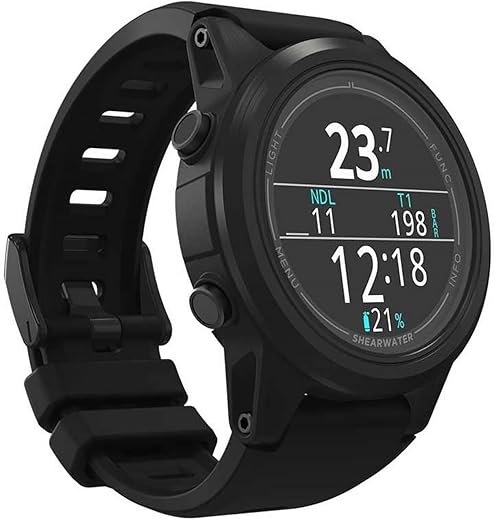
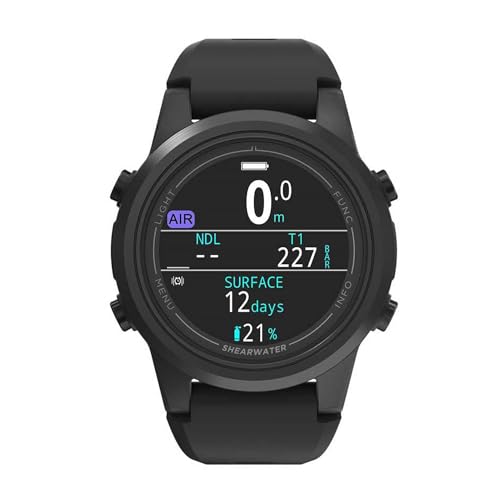
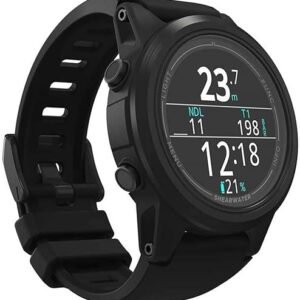
Shearwater Tern TX
$805.00
Open full product pageShearwater reliability meets watch-style convenience with brilliant AMOLED display and wireless air integration.
00 -
 ×
×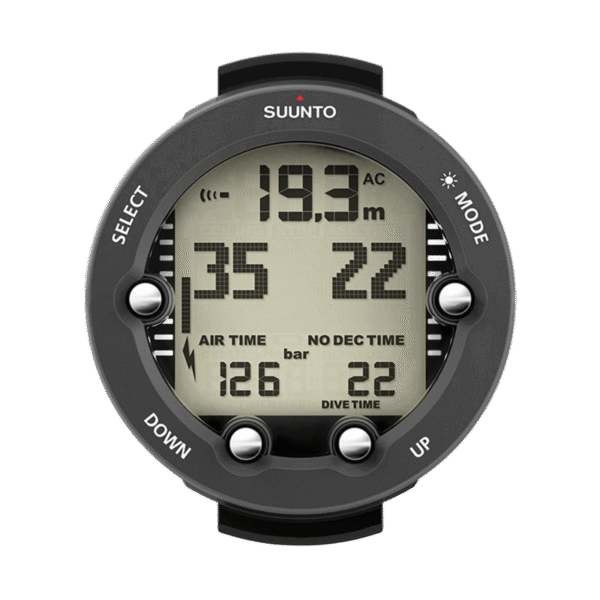


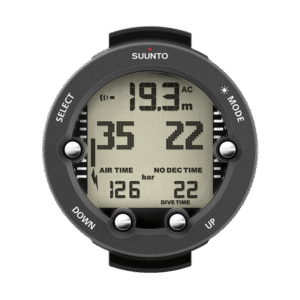
Suunto Vyper Novo
$359.00
Open full product pageMid-range recreational computer with air integration, compass, and multi-gas capability for growing divers.
00 -
 ×
×


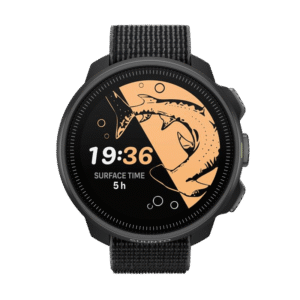
Suunto Nautic S
$549.00
Compact technical dive computer with brilliant AMOLED display and exceptional value for dedicated divers.
Out of stock
Open full product page00 -
 ×
×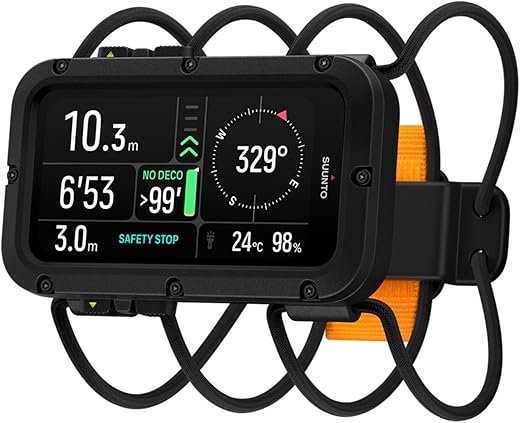


Suunto Nautic
$729.00
Open full product pageProfessional-grade technical dive computer with brilliant AMOLED display and exceptional battery life.
00
Latest Revies








Reviews
There are no reviews yet.